Retaining Wall Drainage Guide

Retaining Wall Drainage Guide

Retaining wall drainage is one of the most important parts of a retaining wall system.

It is also one of the most overlooked.

Many retaining wall failures occur because drainage was ignored, installed incorrectly or removed to reduce cost.

A retaining wall is not only designed to retain soil.

It must also manage water pressure.

Without proper drainage, water builds behind the wall, increasing pressure and significantly raising the risk of movement, cracking or failure.

At Outwest Retaining Walls, we regularly build retaining wall systems across Melbourne West, Bacchus Marsh, Melton, Werribee, Ballarat, Geelong and regional Victoria, where drainage performance is critical to long-term retaining wall success.


Why Retaining Wall Drainage Matters

Soil alone already places pressure on a retaining wall.

When water builds up behind the wall, pressure increases dramatically.

Poor drainage can cause:

  • Leaning retaining walls
  • Bowing walls
  • Cracking
  • Water pooling
  • Soil movement
  • Fence instability
  • Structural failure

Good drainage helps reduce hydrostatic pressure and improves long-term retaining wall performance.

Simply put: Many retaining walls fail because of water, not structure.


What Happens When Drainage Is Poor?

Poor drainage creates excessive water pressure behind retaining walls.

Over time, this can lead to:

Leaning Retaining Walls

Water pressure pushes against the retaining wall, increasing movement risk.


Cracking & Structural Movement

Pressure build-up can place additional stress on steel, sleepers and retaining systems.


Soil Washout

Poor water management can wash material away and reduce support around the wall.


Fence Movement

Fences attached to retaining walls may move when retaining walls shift.

Fence on Top of Retaining Wall Guide →


What Does a Proper Retaining Wall Drainage System Include?

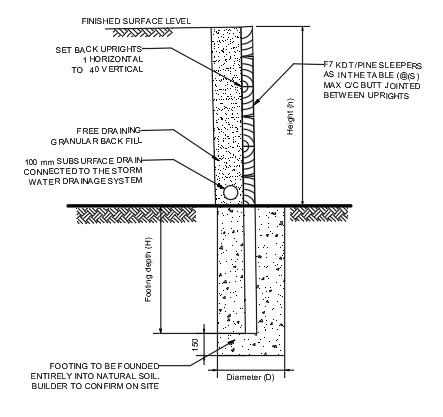
Drainage systems vary depending on site conditions, but a properly constructed retaining wall commonly includes several important components.

Agricultural Drainage Pipe (Agi Pipe)

A 100mm socked agricultural drain pipe (agi pipe) is commonly installed behind retaining walls.

Its role is to collect water and move it away from retained soil.

Without suitable drainage outlets, water can build up and create pressure.

Agi pipe should generally connect to a suitable drainage point or LPOD system where appropriate.


Drainage Rock / Scoria

Drainage rock plays a major role in allowing water to move through retained material.

Commonly used drainage rock includes:

20–40mm scoria or drainage aggregate

Drainage rock creates space for water movement and reduces pressure behind retaining walls.


Geofabric

Geofabric helps separate retained soil from drainage rock.

Without geofabric:

  • Soil can migrate into drainage material
  • Drainage systems clog
  • Water flow reduces

Geofabric helps maintain long-term drainage performance.


Waterproof Membrane

In some retaining wall applications, 200 micron waterproof membrane may be used to help manage moisture movement and protect wall performance.


Suitable Drainage Outlets

Drainage systems only work if water has somewhere to go.

Poorly designed drainage with no outlet is a common problem.

Water may be directed to:

  • Stormwater systems
  • Legal points of discharge (LPOD)
  • Suitable drainage outlets
  • Site drainage systems

Drainage Requirements for Different Retaining Walls

Different retaining wall systems may have different drainage requirements.

Concrete Sleeper Retaining Walls

Concrete sleeper retaining walls commonly rely on properly installed drainage systems to reduce water pressure and maintain structural performance.

Drainage becomes increasingly important for:

  • Higher retaining walls
  • Clay soil conditions
  • Fencing applications
  • Boundary retaining walls

Concrete Sleeper Retaining Walls Melbourne →


Rock Retaining Walls

Rock retaining walls may allow more natural drainage depending on construction style.

However, drainage planning is still important.

Rock Retaining Walls Melbourne → 


Drainage Problems in Melbourne West Clay Soil

Clay soil conditions commonly found across:

  • Melton
  • Bacchus Marsh
  • Caroline Springs
  • Rockbank
  • Gisborne
  • Sunbury

often increase drainage challenges.

Reactive clay soil holds moisture differently and can create additional pressure behind retaining walls.

Poor drainage combined with clay movement is one of the biggest causes of retaining wall failure in Melbourne West.

Clay Soil Retaining Walls Melbourne West →


Common Retaining Wall Drainage Mistakes

No Agi Pipe Installed

No controlled water movement.

Drainage Rock Missing

Water trapped behind wall.

No Geofabric

Drainage material becoming clogged.

Drainage Outlet Ignored

Water with nowhere to go.

Poor Compaction

Backfill movement over time.

Fence Loading Not Considered

Additional movement creating drainage issues.


Does Poor Drainage Mean Engineering Is Required?

Not always.

However, drainage performance often influences retaining wall design and engineering requirements.

Larger retaining walls, surcharge loading and poor soil conditions may increase the need for structural consideration.

When Engineering Is Required → 

Surcharge Loading Explained → 


Why Choose Outwest Retaining Walls?

Outwest Retaining Walls delivers retaining wall construction across Melbourne West and regional Victoria, focusing on drainage, excavation and long-term structural performance.

We understand that drainage is one of the most important parts of a retaining wall system and focus on practical construction methods suited to local site conditions.

Whether your project involves a concrete sleeper retaining wall, rock retaining wall or larger engineered retaining system, our team can help assess drainage requirements suited to your site.


Frequently Asked Questions

Do retaining walls need drainage?

Yes. Most retaining walls require drainage to help manage water pressure and reduce failure risk.


What type of pipe goes behind a retaining wall?

A 100mm socked agricultural drainage pipe (agi pipe) is commonly used.


What drainage rock is used for retaining walls?

20–40mm scoria or drainage aggregate is commonly used behind retaining walls.


What happens if retaining wall drainage is poor?

Poor drainage can lead to wall movement, cracking, water pressure build-up and failure.


Do rock retaining walls need drainage?

Yes. Although some rock walls allow natural water movement, drainage planning is still important.


Need Advice on Retaining Wall Drainage?

Outwest Retaining Walls can help assess retaining wall drainage requirements across Melbourne West and regional Victoria.

Getting drainage right early helps avoid expensive retaining wall problems later.

Primary CTA Button: GET A FREE QUOTE

Secondary CTA Button: CALL NOW

author avatar
Mark Gillespie

TAGS

Categories

Builder

No responses yet

Leave a Reply

Your email address will not be published. Required fields are marked *

Verified by MonsterInsights