
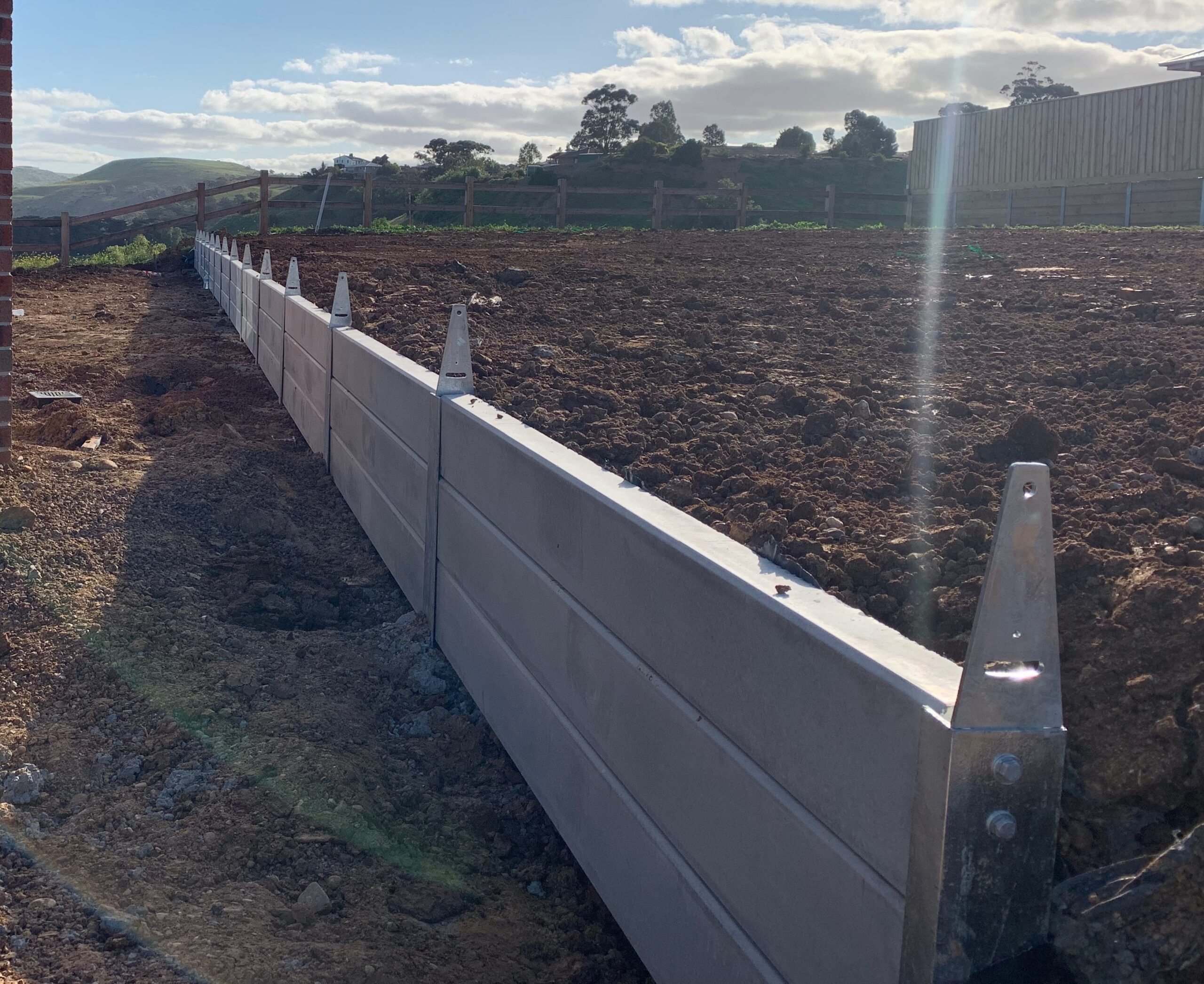
Fence on Top of Retaining Wall Guide Victoria
Adding a fence to a retaining wall may seem straightforward, but it is one of the most common areas where retaining wall problems occur.
A fence changes how a retaining wall performs structurally.
Fence weight, wind pressure, post fixing methods, retaining wall height and site conditions can all impact long-term performance.
At Outwest Retaining Walls, we regularly help property owners across Melbourne West, Bacchus Marsh, Melton, Werribee, Ballarat, Geelong and regional Victoria understand how fencing should be considered when planning a retaining wall.
Whether you are planning a Colorbond fence, timber fence, boundary fence or replacing an existing fence, understanding how retaining walls and fences work together is critical.
Can You Build a Fence on Top of a Retaining Wall?
Yes.
However, not every retaining wall is automatically designed to support fencing.
Fence loading changes the structural requirements of a retaining wall.
This becomes particularly important where:
- Retaining walls exceed certain heights
- Colorbond fencing is used
- High wind exposure exists
- Boundary fencing is installed
- Sloping sites are involved
- Engineering may be required
The key issue is not simply whether a fence can be installed.
The question is: Was the retaining wall designed to carry fence loading?
Many retaining wall problems occur because a fence is added later without structural consideration.
Why Fences Affect Retaining Wall Design
A retaining wall is designed to resist soil pressure.
When a fence is added, additional loading is introduced.
Common fence-related issues include:
- Wind pressure on Colorbond fencing
- Fence post movement
- Increased structural loading
- Incorrect fixing methods
- Retrofitted fences not considered during construction
In some cases, the fence itself may be relatively light, but wind loading can significantly increase pressure on the retaining wall system.
This is why fence planning should happen before the retaining wall is built wherever possible.
Common Fence Types Installed on Retaining Walls
Colorbond Fences on Retaining Walls
Colorbond fencing is one of the most common fence types installed above retaining walls.
However, Colorbond fencing can generate significant wind loading.
Because Colorbond acts like a sail in strong wind conditions, retaining walls supporting Colorbond fencing often require greater structural consideration.
This becomes increasingly important for:
- Taller retaining walls
- Boundary walls
- Open windy areas
- Large uninterrupted fence lengths
Timber Fences on Retaining Walls
Timber paling fences are another common choice.
While timber may create less wind pressure than solid Colorbond panels, timber fences can still affect retaining wall performance.
Common issues include:
- Timber post rot
- Fence movement over time
- Poor fixing methods
- Retrofitted fence installation
Acoustic & Privacy Fencing
Larger privacy or acoustic fences generally create greater loading than standard fencing.
Because of increased height and wind exposure, engineering may become more important.
Fence Fixing Options for Retaining Walls
Several approaches may be used depending on wall design.
Fence Plates
Bolt-on fence plates may allow fence posts to be secured to structural steel.
Welded Fence Plates
Steel retaining posts may include welded fence brackets to support fencing during construction.
Offset Fence Posts
Custom offset retaining wall posts may be used where fence alignment or positioning requires adjustment.
Planning fencing early usually provides better outcomes than retrofitting later.
What Happens When a Fence Is Added Later?
This is one of the biggest causes of retaining wall problems.
Many retaining walls are originally built without considering future fencing.
Later, homeowners decide to install:
- Colorbond fencing
- Timber fencing
- Higher privacy fencing
The problem:
The retaining wall may not have been designed for additional fence loading.
Common consequences include:
- Wall movement
- Leaning retaining walls
- Fence instability
- Excess structural pressure
- Expensive rectification
If fencing may be required in future, planning ahead is strongly recommended.
Retaining Wall Height & Fence Height Considerations
Overall retained height matters.
In Victoria, retaining walls and fences together may trigger additional engineering or approval requirements depending on:
- Total combined height
- Site conditions
- Boundary location
- Structural loading
- Local requirements
Fence height should never be considered separately from retaining wall height.
The complete system matters.
When Engineering Is Required →
When Engineering May Be Required
Engineering may become necessary where:
✔ Taller retaining walls exist
✔ Colorbond fencing increases wind loading
✔ Driveways or structures sit nearby
✔ Boundary walls are involved
✔ Surcharge loading exists
✔ Difficult soil conditions occur
Retaining wall engineering helps determine:
- Structural sizing
- Steel requirements
- Embedment depth
- Drainage needs
- Fence loading suitability
Surcharge Loading Explained → /surcharge-loading-retaining-walls
Common Mistakes With Fences on Retaining Walls
Fence Added Without Planning
Retaining wall not designed for additional loading.
Wind Loading Ignored
Especially common with Colorbond fencing.
Poor Post Embedment
Fence support not adequate.
Fence Too Close to Wall Edge
Additional leverage and pressure created.
Drainage Overlooked
Water pressure increasing behind wall.
Timber Fence Rot
Reduced structural performance over time.
Boundary Disputes
Fence placement and ownership not clarified.
Why Choose Outwest Retaining Walls?
Outwest Retaining Walls delivers retaining wall construction across Melbourne West and regional Victoria with practical consideration for fencing, drainage, engineering and long-term structural performance.
Whether you require a retaining wall with fencing included or want to future-proof your retaining wall for later fencing, our team can provide practical advice suited to your site.
Frequently Asked Questions
Can a Colorbond fence go on a retaining wall?
Yes, but Colorbond fences can create significant wind loading which may impact retaining wall design.
Does a fence increase retaining wall engineering requirements?
Often yes. Fence loading can materially change structural requirements.
Can a fence be added later?
Sometimes, but the retaining wall may not have been designed for additional loading.
Do retaining walls with fences need engineering?
Not always, but many do depending on height, loading and site conditions.
Does fence height matter?
Yes. Combined retaining wall and fence height can influence structural and compliance requirements.
Planning a Retaining Wall With a Fence?
Outwest Retaining Walls can help assess retaining wall and fencing requirements across Melbourne West and regional Victoria.
Whether you are building a new retaining wall or considering fencing above an existing wall, our team can provide practical advice to help avoid costly mistakes later.
Primary CTA Button: GET A FREE QUOTE
Secondary CTA Button: CALL NOW

No responses yet