
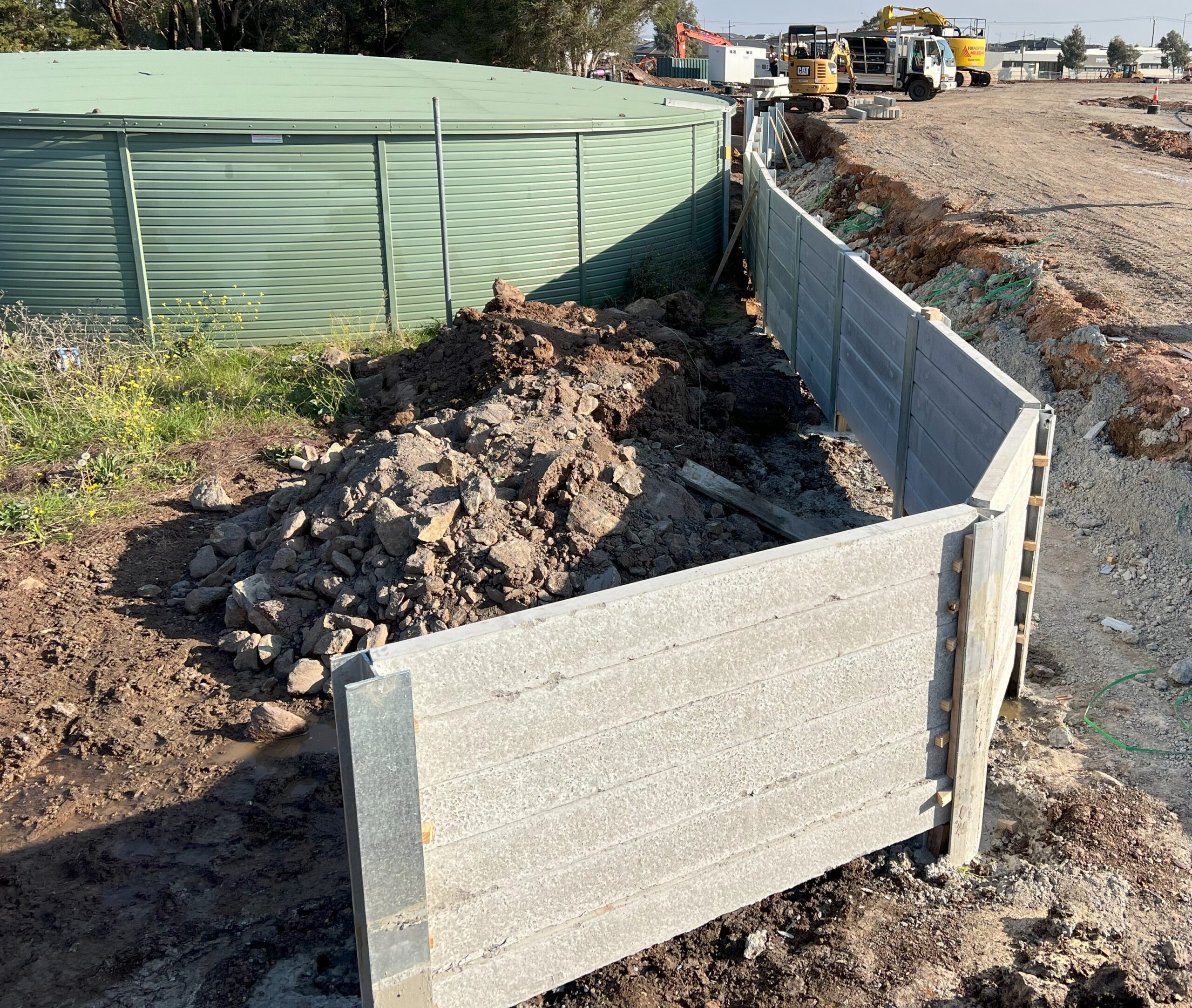
Design & Placement of Retaining Walls Guide
Retaining wall design is about far more than choosing materials or deciding where the wall should sit.
A retaining wall must be positioned and constructed to suit soil conditions, drainage, retained height, fencing, site access and long-term structural performance.
Poor retaining wall placement can create expensive problems later, including drainage failure, reduced usable land, fence instability and unnecessary engineering costs.
At Outwest Retaining Walls, we regularly help property owners across Melbourne West, Bacchus Marsh, Melton, Werribee, Ballarat, Geelong and regional Victoria plan retaining wall systems suited to real site conditions.
Whether your project involves a concrete sleeper retaining wall, rock retaining wall, boundary wall or larger engineered retaining system, proper planning early makes a major difference.
Why Retaining Wall Placement Matters
Where a retaining wall sits on a property affects much more than appearance.
Placement influences:
-
Structural performance
-
Drainage outcomes
-
Usable land area
-
Vehicle access
-
Fence positioning
-
Excavation requirements
-
Long-term maintenance
Moving a retaining wall even slightly can materially change excavation costs, drainage requirements or structural loading.
This is why retaining wall planning should happen before earthworks begin.
Factors That Affect Retaining Wall Design
Several site-specific factors influence retaining wall design.
Retained Height
Height is one of the biggest design considerations.
As retained height increases:
-
Soil pressure increases
-
Structural requirements increase
-
Drainage importance increases
-
Engineering may become necessary
A low decorative retaining wall has very different requirements to a structural retaining wall supporting significant retained soil.
When Engineering Is Required →
Soil Conditions
Ground conditions play a major role in retaining wall performance.
Melbourne West and regional Victoria commonly experience:
-
Reactive clay soils
-
Basalt rock conditions
-
Fill material
-
Sloping sites
-
Cut and fill developments
Poor soil consideration can lead to:
-
Wall movement
-
Drainage problems
-
Structural stress
-
Reduced lifespan
Clay Soil Retaining Walls Melbourne West →
Drainage Requirements
Drainage is one of the most important parts of retaining wall design.
Poor drainage often causes retaining wall failure.
Retaining wall placement should allow for:
-
Agi pipe installation
-
Drainage rock/scoria
-
Geofabric separation
-
Drainage outlets
-
Water movement away from retained soil
A retaining wall built without proper drainage planning is at greater risk of movement or failure.
Retaining Wall Drainage Guide →
Site Access
Access influences retaining wall placement more than many people expect.
Factors may include:
-
Excavator access
-
Material delivery
-
Tight side access
-
Machine movement
-
Excavation staging
Some retaining wall designs work well on paper but become impractical during construction.
Good planning helps avoid unnecessary cost increases.
Surcharge Loading
Additional loading behind retaining walls changes structural requirements.
Examples include:
-
Driveways
-
Vehicles
-
Buildings
-
Pools
-
Sloping ground
-
Stockpiled material
-
Fencing
Placement should consider what may sit behind the wall both now and in future.
Surcharge Loading Explained →
Retaining Wall Placement for Sloping Blocks
Sloping blocks are one of the most common reasons retaining walls are built.
Good retaining wall placement can help:
-
Maximise usable land
-
Improve outdoor functionality
-
Create level areas
-
Improve access between levels
-
Reduce erosion
Poor retaining wall placement can create awkward transitions, unnecessary excavation or reduced usable space.
Planning the layout early is critical.
Boundary Retaining Wall Considerations
Boundary retaining walls require extra planning.
Things to consider include:
Fence Positioning
Fence placement should be considered before retaining wall construction.
Fence on Top of Retaining Wall Guide →
Drainage
Water management near neighbouring properties matters.
Access Constraints
Boundary locations often limit machinery access.
Neighbour Considerations
Boundary retaining walls may affect adjoining land levels.
Choosing the Right Retaining Wall Type
Different retaining wall systems suit different site conditions.
H3: Concrete Sleeper Retaining Walls
Concrete sleeper retaining walls commonly suit:
-
Sloping blocks
-
Boundary retaining walls
-
Residential developments
-
Engineered retaining systems
-
Long-term structural performance
Concrete Sleeper Retaining Walls Melbourne →
Rock Retaining Walls
Rock retaining walls often suit:
-
Larger landscapes
-
Rural properties
-
Natural terrain
-
Embankments
Rock Retaining Walls Melbourne →
Common Retaining Wall Design Mistakes
Poor Drainage Planning
One of the biggest causes of retaining wall failure.
Fence Loading Ignored
Retaining walls not designed for future fencing.
Wall Too Close to Structures
Additional loading underestimated.
Poor Site Planning
Reduced usable land.
No Allowance for Soil Conditions
Clay movement or unstable fill ignored.
Cheapest Option Chosen
Short-term thinking creating long-term cost.
Why Choose Outwest Retaining Walls?
Outwest Retaining Walls delivers retaining wall construction across Melbourne West and regional Victoria, focusing on practical retaining wall solutions suited to real site conditions.
We understand excavation, drainage, structural loading and retaining wall placement, helping clients avoid common planning mistakes before construction begins.
Whether your project involves a concrete sleeper retaining wall, rock retaining wall or larger commercial retaining system, our team focuses on practical long-term outcomes.
Frequently Asked Questions
How do I know where a retaining wall should go?
Placement depends on site levels, drainage, usable space, fencing and excavation requirements.
Does retaining wall placement affect drainage?
Yes. Poor placement can increase drainage problems and water pressure.
Do sloping blocks need retaining walls?
Often yes. Retaining walls commonly help create usable land and manage levels.
Does retaining wall placement affect engineering?
Yes. Height, loading and nearby structures may influence engineering requirements.
What retaining wall type works best?
It depends on site conditions, budget, aesthetics and long-term goals.
Need Advice on Retaining Wall Design?
Outwest Retaining Walls can help assess retaining wall design and placement across Melbourne West and regional Victoria.
Practical planning early often helps avoid costly retaining wall mistakes later.
Primary CTA Button: GET A FREE QUOTE
Secondary CTA Button: CALL NOW

No responses yet