
Residential, commercial & civil retaining walls
Dry stack & mortared rock retaining
Basalt, sandstone & feature rock wall options
Melbourne West & Regional Victoria coverage
Rock retaining walls provide a durable, natural and highly effective retaining solution for sloping blocks, rural properties, larger landscapes and difficult terrain.
Across Melbourne, Melbourne West and regional Victoria, rock retaining walls are commonly used for residential, commercial and civil projects where natural appearance, erosion control and long-term structural performance matter.
Whether your project involves a sloping block, acreage property, boundary retaining wall, erosion management, feature landscaping or a larger retained area, rock retaining walls provide a practical retaining solution suited to a wide range of site conditions. At Outwest Retaining Walls, we build dry stack, mortared, basalt and sandstone rock retaining walls across Melbourne West, Bacchus Marsh, Ballarat, Geelong and regional Victoria, combining excavation, drainage and retaining wall construction designed for long-term performance.
Get a Free Quote Today!
Why Choose Rock Retaining Walls?
Rock retaining walls remain one of the most popular retaining wall options for larger landscapes, sloping blocks and natural site conditions.
Benefits of rock retaining walls include:
Natural Appearance
Rock retaining walls often blend naturally into surrounding landscapes.
- Rural properties
- Larger residential sites
- Acreage developments
- Sloping blocks
- Landscape feature walls
Strong Structural Performance
When designed and constructed properly, rock retaining walls provide excellent retaining capability.
Rock retaining walls are commonly used for:
- Embankments
- Larger retained heights
- Sloping land
- Erosion control
- Commercial retaining applications
Long-Term Durability
Rock retaining walls offer long-term durability with minimal maintenance requirements.
Unlike some retaining wall materials, rock retaining systems can provide strong performance over extended periods when drainage and construction are completed properly.
Flexibility for Different Landscapes
Rock retaining walls can suit:
- Natural terrain
- Rural sites
- Steep slopes
- Large landscapes
- Feature retaining applications
This flexibility makes rock retaining walls popular across Melbourne West and regional Victoria.
Types of Rock Retaining Walls
Different rock retaining wall styles suit different projects.
Dry Stack Rock Retaining Walls
Dry stack retaining walls use carefully placed rock without mortar.
Benefits may include:
- Natural drainage performance
- Rustic appearance
- Flexible movement characteristics
- Natural landscape integration
Dry stack rock retaining walls are commonly used for:
- Rural properties
- Landscape retaining
- Sloping sites
- Decorative retaining applications
Mortared Rock Retaining Walls
Mortared rock retaining walls provide a more formal and structurally rigid retaining system.
These retaining walls may suit:
- Residential retaining walls
- Boundary retaining walls
- Feature walls
- Higher structural retaining applications
Basalt Retaining Walls
Basalt retaining walls are a popular option across Victoria.
Basalt rock often provides:
- Strong structural performance
- Natural durability
- Premium appearance
- Suitability for feature retaining walls
Basalt retaining walls commonly suit Melbourne West and regional Victorian properties.
Sandstone Retaining Walls
Sandstone retaining walls can provide a softer and more decorative appearance.
They are commonly selected for:
- Landscape retaining walls
- Feature gardens
- Premium residential applications
Feature Rock Retaining Walls
Feature retaining walls focus on both structural performance and visual presentation.
Feature rock walls may include:
- Feature stone selection
- Decorative finishes
- Tiered retaining systems
- Premium landscaping integration
Rock Retaining Walls vs Concrete Sleeper Retaining Walls
Both rock retaining walls and concrete sleeper retaining walls can provide strong long-term retaining performance, however different retaining wall systems suit different site conditions and project goals.
Rock Retaining Walls
Rock retaining walls are often preferred where:
- natural appearance is important
- larger landscapes or acreage properties are involved
- softer visual integration is preferred
- erosion control is required
- steep or irregular terrain exists
Concrete Sleeper Retaining Walls
Concrete sleeper retaining walls are commonly selected where:
- cleaner lines and modern finishes are preferred
- tighter residential boundaries exist
- engineered retaining systems are required
- fencing may be installed above retaining walls
- maximising usable space matters
Choosing the right retaining wall system depends on site conditions, retained height, drainage requirements, access and long-term project goals.
Rock Retaining Walls for Sloping Blocks
Rock retaining walls are commonly used to manage steep or difficult sites.
Benefits for sloping blocks include:
- Improved usable land
- Better erosion control
- Natural appearance
- Improved access between levels
- Better landscape integration
Many properties throughout Bacchus Marsh, Ballarat, Gisborne, Sunbury and Melbourne West benefit from rock retaining systems on sloping sites.
Drainage Matters for Rock Retaining Walls
Good drainage remains critical for long-term retaining wall performance.
Poor drainage is one of the most common reasons retaining walls fail.
Depending on site conditions, drainage systems may include:
- Agricultural drain pipe (agi pipe)
- Drainage rock or scoria
- Geofabric separation
- Suitable drainage outlets
Water management behind retaining walls should always be considered.
Rock Retaining Walls & Clay Soil Conditions
Melbourne West commonly experiences reactive clay soil conditions.
Clay soil movement can increase retaining wall pressure and affect long-term performance.
Rock retaining walls may perform well in some clay soil applications, however site conditions, drainage and wall design all matter.
Do Rock Retaining Walls Need Engineering?
Sometimes.
Engineering requirements for rock retaining walls may depend on:
- Wall height
- Retained loads
- Slope conditions
- Nearby buildings or structures
- Surcharge loading
- Drainage requirements
- Site-specific ground conditions
While some smaller rock retaining walls may not require engineering, larger retaining systems, commercial applications and walls retaining significant loads often require additional structural consideration.
The entire retaining wall system matters, including drainage, rock selection, wall geometry and site preparation.
When Engineering Is Required →
Surcharge Loading Explained →
Rock Retaining Wall Applications
Rock retaining walls are commonly used for:
Residential Retaining Walls
Natural retaining wall solutions for homes and landscapes.
Sloping Blocks
Managing changing site levels and difficult terrain.
Acreage & Rural Properties
Natural retaining wall systems for larger landholdings.
Commercial Retaining Walls
Larger retaining systems for developments and infrastructure.
Feature Landscaping
Premium retaining wall finishes for visual appeal.
Recent Rock Retaining Wall Projects
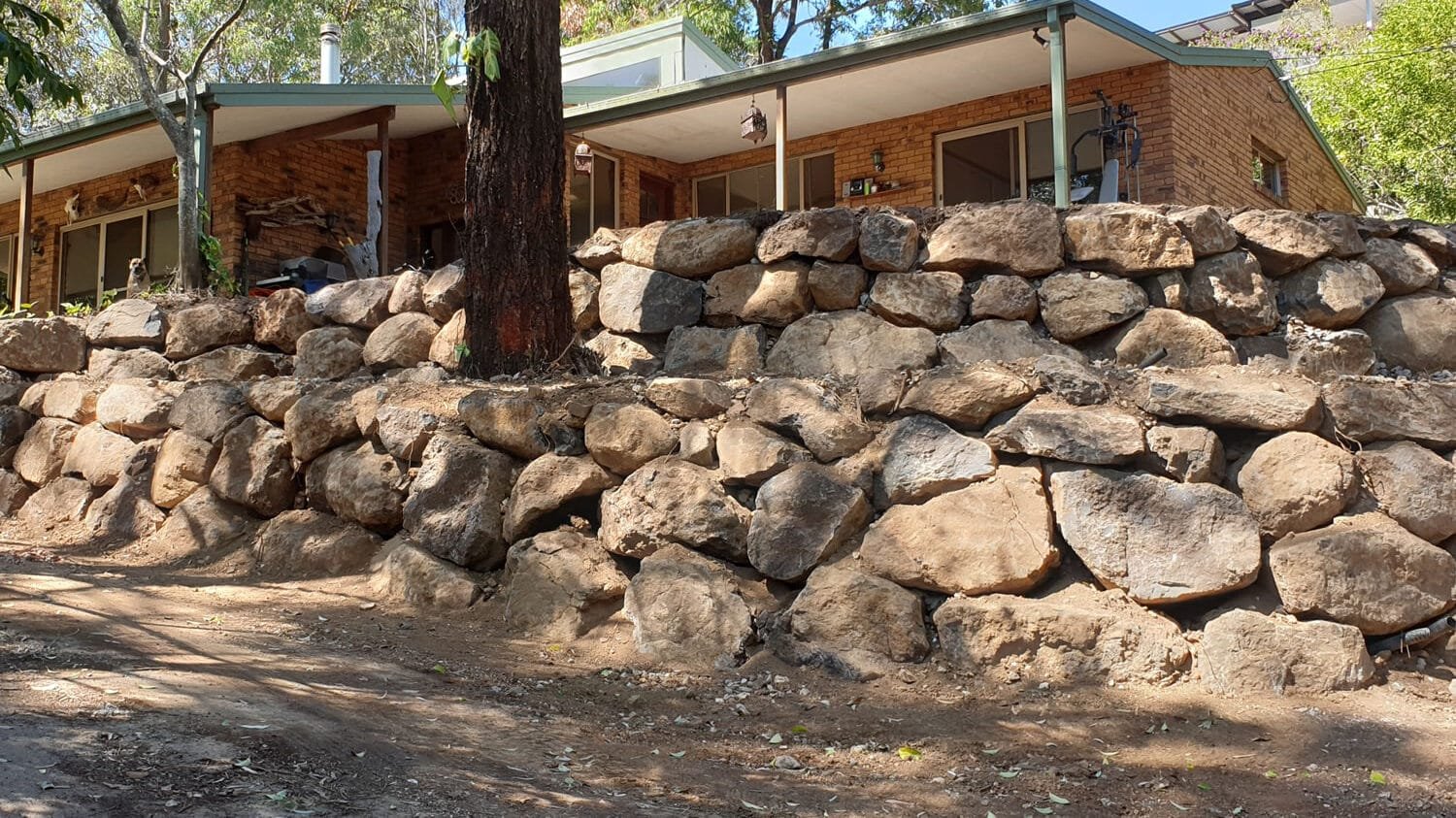
Basalt Rock Retaining Wall, Bacchus Marsh
Natural basalt rock retaining wall completed for a sloping residential property in Bacchus Marsh.
Project Highlights
- Basalt rock retaining system
- Sloping block conditions
- Excavation completed
- Drainage integrated into retaining system
- Natural landscape finish
Designed to stabilise changing levels while complementing the surrounding rural landscape.
Dry Stack Rock Retaining Wall, Ballarat
Dry stack retaining wall constructed to improve erosion control and manage changing site levels on a regional property.
Project Highlights
- Dry stack rock retaining wall
- Rural property application
- Natural drainage characteristics
- Tiered retaining solution
- Improved erosion control
Commercial Rock Retaining Wall, Melbourne West
Large rock retaining wall completed for a commercial site requiring practical retaining performance across changing site levels.
Project Highlights
- Commercial retaining application
- Excavation and site preparation completed
- Drainage integrated
- Long-term structural performance focus
- Larger retained area
Why Choose Outwest Retaining Walls?
At Outwest Retaining Walls, we focus on more than simply installation.
Our retaining wall approach includes:
✔ Excavation & site preparation
✔ Drainage planning
✔ Structural retaining wall performance
✔ Sloping block solutions
✔ Practical retaining wall outcomes
Whether your project involves a dry stack rock retaining wall, basalt retaining wall, sandstone retaining wall or engineered retaining system, our team focuses on practical retaining wall solutions suited to real site conditions.
Areas We Service
Outwest Retaining Walls builds rock retaining walls across Melbourne West, Bacchus Marsh, Melton, Werribee, Sunbury, Gisborne, Ballarat, Geelong and surrounding regional Victoria for residential, commercial and civil projects.
Need a Rock Retaining Wall?
Outwest Retaining Walls builds rock retaining walls across Melbourne West and regional Victoria for residential, commercial and civil projects.
Whether your retaining wall project involves a sloping block, rural property, feature retaining wall or larger engineered retaining system, our team can provide practical retaining wall solutions designed for long-term performance.
F.A.Q.
Frequently Asked Questions
Rock retaining wall costs vary depending on wall height, length, rock type, excavation, drainage, access and engineering requirements. Site-specific pricing is generally recommended.
Basalt, sandstone and natural rock are all commonly used for retaining walls. The best option depends on structural requirements, site conditions and the desired finish.
Yes. Good drainage helps reduce water pressure behind retaining walls and improve long-term structural performance.
Sometimes. Retaining wall height, site conditions, surcharge loading and nearby structures may influence engineering requirements.
Yes. Rock retaining walls are commonly used to manage changing site levels, improve erosion control and create more usable land on sloping sites.
Dry stack rock retaining walls use carefully placed rock without mortar, creating a more natural appearance and allowing flexibility in movement. Mortared rock retaining walls use mortar for a more formal, rigid finish and are often selected for structured residential or feature retaining applications.
Basalt retaining walls are often chosen for strength, durability and structural performance, while sandstone retaining walls provide a softer, more decorative appearance. The best option depends on site conditions, retaining requirements and visual preference.
When constructed correctly with suitable drainage and quality site preparation, rock retaining walls can provide decades of long-term structural performance.
Outwest Retaining Walls builds rock retaining walls across Melbourne West, Bacchus Marsh, Melton, Werribee, Sunbury, Gisborne, Ballarat, Geelong and surrounding regional Victoria.
